Wednesday, May 28, 2014

IS THERE A GOD? (An address delivered by R. Verne McCullough over Radio Station KSL in 1928)

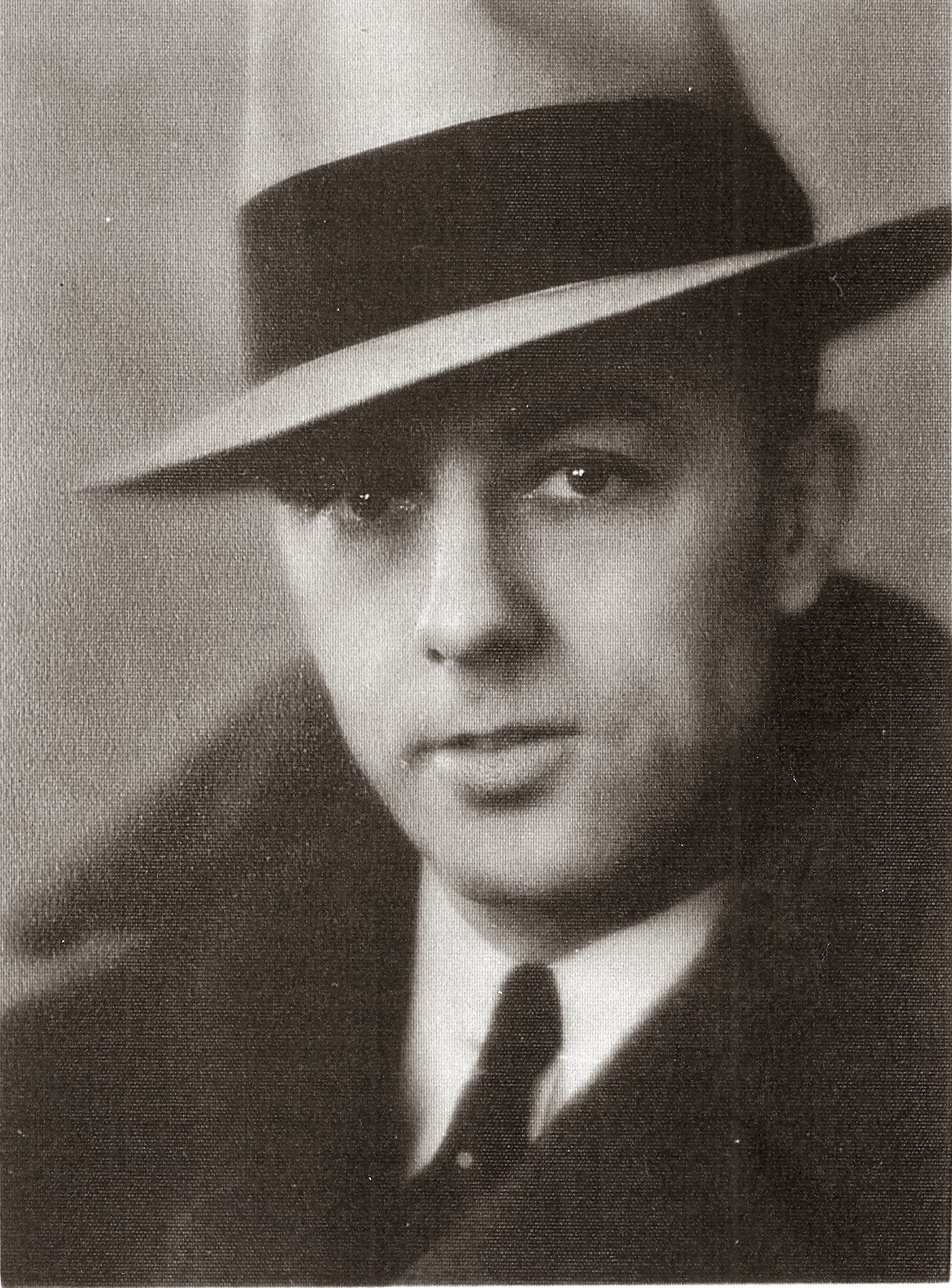
This is my great grandfather, R. Verne McCullough.
Raymond Verne McCullough with hat
Raymond Verne McCullough


In 1928, at the age of 36, he gave an address on KSL Radio, called "Is There A God?"

Forty-one years later, President Harold B. Lee sent a letter to R. Verne McCullough's wife, referring to this address:

THE COUNCIL OF THE TWELVE 47 E. SOUTH TEMPLE STREET SALT LAKE CITY, UTAH 84111
May 29, 1969
Mrs. R. Verne McCullough 304 East 1st South Salt Lake City, Utah
Dear Irene:
First, may I thank you for permitting me to have a visit with Verne, This radio address reminded me of a series of talks that he gave on the radio in a kind of running debate with one of the young ministers whose name has escaped me. Verne was a great "defender" of the faith with his brilliant legalistic mind. He seemed to revel in projecting the doctrines of the Church and pointing out the errors and weaknesses which were foreign to true doctrine.
This address is one which would make an appeal to scholars like the Princeton University professors. It is well documented with statements from recognized scholars as 'well as his own personal witness which he speaks of as "heart-knowledge" which means in the language of another, things the heart understands beyond what the mind knows.
I would think this would be something you might wish to give to your own children and grandchildren to remember Verne, and possibly to hand out to the sophisticated doubters in our day of great challenge and upheaval.
I would certainly encourage you to send it along as requested by the Princeton University Library. I would find nothing to criticize and much to commend.
May the Lord continue to bless you during these days when memories such as these will recall the tremendous capacity which your husband manifested in so many ways.
Please accept my commendation for this privilege you have granted and be assured always of our deep affection for you and Verne and your family.
Sincerely yours, Harold B. Lee

I have typed up the radio address here for Verne's posterity to read and treasure as President Harold B Lee suggested. (If you would like a PDF copy of this address, just e-mail me at marie.familyhistory@gmail.com)

IS THERE A GOD?
(An address delivered by R. Verne McCullough over Radio Station KSL in 1928)

            “He that cometh to God must believe that He is, and that He is a rewarder of them that diligently seek Him,” spake Paul the Apostle to the Hebrew saints.
            The wave of indifference, infidelity and atheism, which is sweeping the centers of higher learning with its baneful influences on the uncultured as well as the cultured minds of America and Great Britain, has created considerable alarm in religious circles. 
            No longer are we justified in lulling ourselves into security of God’s existence under the cloak of the time-worn declaration that the existence of God does not admit of being proved; nor are we justified in deriding the attempts of thinking students to curb the ever-growing tendency to infidelity.  One thoughtful writer has said:
            “Proofs for the existence of God coincide with the grounds for the belief in God; they are simply the real grounds for the belief established and expounded in a scientific manner.  If there be no such proofs, there are also no such grounds; and a belief which has no ground, if possible at all, can be no proper belief, but an arbitrary self-made, subjective opinion.”
            If we would advance in religion, it must be, not by getting rid of our belief in God, but by getting deeper and wider views of His character and operations, and by conforming our hearts and lives more sincerely and faithfully to our knowledge.
            To reinforce our convictions of God’s existence, and to arrest the insidious inroads of modern infidelity in the minds of the younger generation, I address myself to the subject, “Does God exist?”
            The Bible does not offer arguments to prove the existence of Deity, but it gives us a picture of the world with God at work in it, which devout religious folk appreciate and instinctively recognize as true.  May I suggest, however, that the whole need no physician, but to doubting minds, comparable to my own, this treatise is offered.
            There are two methods of investigating a problem.  The first method is that used by orthodox religious individual, who begins his research with certain well-defined conclusions, and then searches for facts to support them.  The second method is that employed by the careful scientific thinker who, like a little child, untrammeled by pre-conceptions, follows where the facts lead him, irrespective of previously wrought out opinions or beliefs.  To those friends listening on the air tonight, who have nothing in common with revealed religion, I ask you in all candidness to forget whatever bias or prejudice you may have, and investigate this problem with a scientific untrammeled mind.
            We will first consider the issue in relation to man’s understanding, and then its message in relation to his deeper feelings and emotions.  Time will only permit the setting up of a few guide posts pertaining to this all important question.
            One of the oldest and yet basic evidences of God’s reality is the general consent of mankind to His existence.  The conception of God and its kindred ideas of religion seem to have been intricately interwoven into the thought and action of all races of men.
            Plutarch summed up the argument in this wise:
            “If you search the world, you may find cities without walls, without letters, without kings, without money; but no one ever saw a city without a Deity, without a temple, or without prayers.”
            This universal idea of God’s existence is aptly stated by Aristotle:
            “What seems true to some wise men is somewhat probable; what seems true to most or all wise men is very probable; what most men, both wise and unwise, assent to, still more resembles truth; but what men generally consent in has the highest probability, and approaches so near to demonstrated truth, that it may pass for ridiculous arrogance and self-conceitedness, or for intolerable obstinacy and perverseness to decry it.”
            The whole world, it is urged, must surely be right.
            The design argument is one of the most ancient and yet convincing of all.  Where there is a design there must be a designer.  In other words, the architecture of Heaven denotes directing intelligence just as surely as the contrivances of men.  For what is meant by design?  Contrivance: the adaptation of means to an end.  “Such adaptation,” says a thoughtful writer, “indicates contrivance for given purpose, and contrivance is the evidence of intelligence, and intelligence is the attribute of mind, and the intelligent mind that built the stupendous universe is God.”
            Everywhere in nature is the evidence of an intelligent designer.  When rain falls on the soil of a field adapted for vegetable growth, the filtration of rainwater through the soil does not disturb one particle of all nutritive matter which it contains available for vegetable growth, such as potash, silicic acid, ammonia, etc.  The most intermittent rain is unable to abstract from it (except by the mechanical action of floods) any of the chief requisites for its fertility. The particle of mould not only firmly retains all matter nutritive to vegetable growth, but also immediately absorbs such as are contained in the rainwater.  Did blind chance bring about such a condition, or is there intelligent super vision over the organic adaptations of nature?
            The evidences of a supreme designer crowd still more upon the vision when we come to the human mind.  “What can be more absurd,” asks Montesquieu, “than to imagine that a blind fatalistic force has produced human beings?”
            Robert Flint states:
            “The complicated and refined adjustments of the body to the mind, and of the mind to the body, are so numerous and interesting that their study has now become the task of a special class of scientific men.  A very little disorder in the organization of the brain, such as even microscopic postmortem examination may fail to detect, suffices to cause hallucinations of the senses, to shake intellect from the throne, to paralyze the will, and to corrupt the sentiments and affections.  How precise and skillful must the adjustment be between the sound brain and the sane mind.  Who sufficiently realizes the mystery of wisdom which lies in the familiar fact that the mind, by merely willing to use the members of the body, sets in motion instantaneously and unconsciously, without effort and without failure, cords, and pulleys and levers, joints and muscles, of which it only vaguely, if at all, surmises the existence?  The laws of our various appetencies, affections, and emotions, and their relation to their special ends or objects, the nature of the several intellectual faculties and their subservience to mental culture, and still more the general constitution of the mind as a system consisting of a multitude of powers under the government of reason and conscience, present to us vast fields filled with evidences of Divine Wisdom.”
            What is this great creative director under whose supervision a thinking human machine is made possible? Is it just hazard—chance—or is it more comforting to call it nature? Voltaire, the great French thinker, in discussing this question, took a watch from his pocket, and as he looked upon the same, remarked that he could plainly see a means adapted to an end, denoting contrivance, and that contrivance clearly established to his mind that there was an intelligence behind the contrivance; that intelligence was the attribute of mind, and the intelligent mind who manufactured the watch was the watchmaker; and that man might just as well call the watch the watchmaker as to call nature the universe maker.
            Professor Laurant of Ghent, in the concluding volume of the “Etudes Sur L’Histoire de L’Humanite,” says:
            “What is nature anyway—whence has it this power, this foresight, this intelligence, which are so conspicuous in the course of our destinies? If nature is matter, and nothing but matter, that too is no answer.  Who will believe that matter acts with wisdom—with intelligence?  Where there is intelligent action there must be an intelligent being; therefore nature leads us to God.  Finally, there are those who substitute for nature general laws.  But do not laws suppose a legislator?  And who can this legislator be, if not God?”
            Robert Flint expresses his idea by the following illustration:
            “Throw letters together without thought through all eternity, and you will never make the express thought.  All the letters in the Iliad might have been tossed and jumbled together from morning to night by the hands of the whole human race, from the beginning of the world until now, and the first line of the Iliad would have been still un-composed, had not the genius of Homer been inspired to sing the wrath of Achilles and the war around Troy.  But what is the Iliad to the hymn of creation, and the fame of providence?  Were these glorious works composed by the mere jumbling together of atoms, which were not even prepared beforehand to form things, as letters are to form words, and which had to shake themselves into order without the help of any hand?  Such would be nonsense.”
            Some immature students argue that science explains all through the application of the law of cause and effect and therefore the ideas of God should be relegated to the rubbish heap.  Such reasoning is unsound for the existence of God is entirely out of the domain of natural science. Natural science deals with secondary causes and effects and in nowise challenges the existence of a First Great Cause.  To illustrate:
            An electric lamp shows a light, which light is produced by the passage of electricity through the little thread of carbon, the latter offering a resistance to the electricity—resistance causing the energy of the electricity to be transformed into heat and light.  The electricity is produced from the dynamo, the power of which is imparted by a steam engine.  The steam engine takes up motion from the energy in the coal, which energy is released by combustion.  The coal obtains its chemical energy from the sun, which imparted it to the trees from which the coal originated, or else, perhaps, from the energy inherent in its atoms.  The sun or atoms obtained their energy from the universal energy.  So you see the whole process is a chain of transformations, which transformations or secondary causes and effects are the domain of natural science.  Does it not follow that just as the phenomenon of the electric lamp denotes a supervising intelligence, the electrical engineer, directing the law of cause and effect in the contrivances of men so that--

“In Nature’s most minute design,
The signature and stamp of power divine:
Contrivance intricate, expressed with ease,
Where unassisted sight no beauty sees,
The shapely limb and lubricated joint
Within the small dimensions of a point:
Muscle and nerve miraculously spun,
His might work, who speaks and it is done.
The Invisible, in things scarce seen revealed,
To whom an atom is an ample field.”

            The moral law which reveals itself to conscience is certainly a witness for God. 
            Robert Flint, in his book entitled “Theism,” whose writing I am deeply indebted to, declares:
            “There is probably no living practical belief in God which does not begin with the conscience.  It is not reasoning on a first cause, nor even admiration of the wisdom displayed in the universe, which makes the thought of God habitually and efficaciously present to the mind.  It is not any kind of thinking nor any kind of feeling excited by the physical universe or by the contemplation of God’s presence, and of His relationship to us.  It is only in and through an awakened and active conscience that we realize our nearness to God—His interest in us, and our interest in Him.  Without a moral nature of our own, we could not recognize the moral character and moral government manifested by Him.  We might tremble before His power, or we might admire his skill, but His righteousness would be hidden from us, His moral laws would be meaningless to us, and their sanctions would be merely a series of physical advantages or physical disasters.  But a God without righteousness is no true God, and the worship which has no moral element in it is no true worship.  As, then, it is only through the glass of conscience that the righteousness of God can be discerned, and as that attribute alone can call forth, in addition to the fear, wonder, and admiration evoked by power and intelligence, the love, the sense of spiritual weakness and want, and the adoring reverence, which are indispensable in true worship—such worship as God ought to receive and man out to render—the significance of the moral principle in the theistic argumentation is vast indeed.”
            Without further elaboration, the existence of conscience in every human being obviously infers the existence of a supreme moral governor who will reward or punish us according to our works—otherwise why conscience—if annihilation is our lot. Were there no God, there ought to be no fear of God awakened even by crime; but atheism itself cannot protect a criminal when alive to his guilt from being haunted and appalled by fears of a judgment and a justice more terrible than those of man.
            The heart-knowledge of the existence of Deity to each individual who has it, is most convincing.  I know there is God because I know Him.  I experience in prayer, mediation and sorrow a conviction which comes from more tangible evidences.  The objector is open to say, “You assert you have this feeling.  I am willing to admit your sincerity, but you may be the victim of an illusion.  All I can say is that I have no such feeling myself.”  It might be adequate to reply that my convictions are corroborated by thousands of thinking students who have felt similar convictions, many of whom have been willing to seal their convictions with their life’s blood.
            Ralph Waldo Emerson beautifully illustrates this heart knowledge of God in the last verse of his poem “Goodbye, Proud World.”

“Oh when I am safe in my sylvan home,
I mock at the pride of Greece and Rome;
And when I am stretched beneath the pines,
Where the evening star so holy shines,
I laugh at the lore and the pride of man,
At the sophist schools, and the learned clan;
For what are they all in their high conceit,
When man in the bush with God may meet?”

            The supreme efforts of reason, science and philosophy have proved inadequate to supply the all-convincing evidence of God’s existence.  The heart-touching lamentation of the brilliant agnostic, Robert G. Ingersoll, uttered at the grave of his brother, is indicative of this fact.  In this now famous oration, Ingersoll states:
           
            “Life is a narrow vale between the cold and barren peaks of two eternities.  We strive in vain to look beyond the heights.  We cry aloud and the only answer is the wail of our echoing cry.  From the voiceless lips of the un-replying dead there comes no word.”
            The doleful conclusions of Dean Mansel are interesting in further pointing out the inadequacy of human reasoning to satisfy the heart yearnings for immortality.  After a lifetime of study, Mansel writes:
            “The conception of the Absolute and Infinite, from whatever side we view it, appears encompassed with contradictions.  There is a contradiction in supposing such an object to exist, whether alone or in conjunction with others; and there is a contradiction in supposing it not to exist.  There is a contradiction in conceiving it as one; and there is a contradiction in conceiving it as many.  There is a contradiction in conceiving it as personal; and there is a contradiction in conceiving it as impersonal.  It cannot without contradiction, be represented as active; nor, without equal contradiction, be represented as inactive.  It cannot be conceived as the sum of all existence; nor can it be conceived as a part only of that sum.”
            Natural religion needs revealed religion to complete it.  This revelation is focused in the divine human figure of Jesus Christ, foretold and expected in the Old Testament, present to teach and work in the New, and even in modern times appeared as a glorious immortal God with His Father to the Prophet Joseph Smith. 
            The truth that God exists and is really a Father, with all a Father’s love toward the children of men, is my earnest and sober testimony.

  
(The foregoing is an address delivered by R. Verne McCullough over Radio Station KSL in 1928)
(Typed by Marie Arnold 5-28-2014)


Monday, December 17, 2012

James and Ellen Shellington

I was THRILLED to find this photo of my 3rd Great Grandfather and Grandmother.

James and Ellen Shellington.


James was born in Ireland in 1772.
Ellen Anderson Shellington was born in Ireland in 1770.

Their oldest daughter Ann married James Henderson.
Their youngest son Alexander immigrated to Utah.
He married Almira Heath Silcock.  They are the parents of Nicholas Thomas (NT) Henderson.
NT and Alice are the parents of Jay Harold Henderson, my grandfather.

I am so grateful for the person who posted this on their family tree to share with us!

Saturday, October 6, 2012

Bandits in the Desert!


Last week's post Travelling with Toddlers brought in a new story.

LuAnn Richardson and Gerry Ebert let us know what other troubles Irene McCullough spoke of travelling across the Utah, Nevada and California deserts in the 1920s.

BANDITS.

Yes, there were really bandits that roamed the highways in those days.

People would travel in caravans for protection...especially when camping out on the side of the road at night.

I guess the wild west lasted a little longer than the horses and wagons.

Here is another picture of those cute toddlers.

From left to right: Irene, Stan, Pauline, and Verne McCullough.


Thursday, September 20, 2012

Travelling with toddlers


A picture may say a 1000 words...but let's add just a few to expand the story...

Verne and Irene McCullough's early travelling with two toddlers in the 1920s.

Bring your own food.  There is no fast food.

Air Conditioning?--Roll down the...wait...there are no windows!

Once they stopped in Las Vegas...at that time it was ONLY a gas station.  

Two children in diapers.  No disposables back then. Irene would wash the diapers in water they brought with them and hang them to dry on various parts of the car!

Bring a tent. Each night they would CAMP next the the car.

How do you entertain two toddlers on a trip back then? 
Wish I could ask them.

No more complaints about travelling from me.

Wednesday, August 17, 2011

Yale Avenue Home


A long time ago Leslie McCullough Cates sent me this wonderful file to share. I am finally sharing it. Sorry for the long wait.

This document includes many pictures and stories about the home on Yale Crest where Verne and Irene McCullough lived. Leslie's dad, R.V., was one of their sons. Verne & Irene's children who lived here included: Pauline, Stan, Beth, Gerry, Joan, & R.V.

Here is the document she created: Yale Avenue Home

Enjoy!!!

Thank you Leslie!!!

Sunday, November 14, 2010

Veteran's Day


Here are the two veteran's from the family of which I am aware:

Jay Harold Henderson...served in World War II. He is my grandfather.

He and my grandmother were married as I understand when he was home on leave...if anyone knows the whole story...I would love to know it!

I only have this journal entry from my grandmother:

"As World War II was on at this time, Jay was called into the service. Our date was quite special, but I have to admit that marriage had not really entered my head. We had only gone together three months even though it was very often.

Yet, I definitely recall the thing that made this evening very special!!! I said goodbye to Jay and closed the door and started to walk up the stairs to my room. A voice said to me, as clear as could be, 'That is the boy you will marry!' Though I realize now that this message came from the Lord, at the time, I was spiritually immature and I wondered at this coming so strongly into my mind. But a seed was planted in my mind for sure.

All that next 9 months we wrote steadily and he sent me lovely gifts for Christmas. He was returning for a leave at the end of May and I resolved that I would really 'work on him' because 'that was the boy I wanted to marry.' He called me from the airport when he arrived in Salt Lake and I drove out to pick him up. All the way, I thought that these next two weeks I must really be at my best so that he might ask me to marry him.

Imagine my surprise when on the way in to town from the airport he asked me to marry him! The next two weeks were really hectic. I was not only planning for a big wedding, but I was in the process of graduating from the University of Utah....How grateful I am that we were able to marry in the temple--the most peaceful, quiet and beautiful time of the two weeks."

So I guess my grandmother was a "war bride". They were married 12 June 1945. I would love to know how long he was in the service. I do know he was in Okinawa for a while.


Guy Messiah Keysor...served in the Mexican American War with the Mormon Battalion...click on his name to learn more.


If you know of more veterans in our family let me know!

Wednesday, September 1, 2010

Jens Peter and Ane Pederson Jensen

Here is some information & pictures of my 2nd great grandparents Jens & Ane Jensen.

They are the parents of Alice "Allie" Matilda Jensen who married Nicholas Thomas Henderson.
Allie & Nicholas Henderson are the parents of Jay Harold Henderson.

I am so excited to have found a picture of both of them! If anyone has more pictures of them, please share! E-mail me at funseekerfamilyhistory@gmail.com.

Jens Peter Jensen


Ane Pederson Jensen (possibly holding Alice "Allie" Matilda Jensen)


The following is from the Latter-Day Saint Biographical Encyclopedia Volume 1, Andrew Jensen, 1901, page 570-1

"Jens Peter Jensen:

Bishop of Crescent Ward (Jordan Stake), Salt Lake county, Utah, is the son of Soren Jensen and Nielsine Christine Neucuibing, and was born June 16, 1859, in Tommberby parish, Thisted amt, Denmark. In 1878 he was baptized into the Church by Elder Jens Christensen. He was ordained an Elder and sent out to labor as a local missionary. In June, 1879, he emigrated to Utah, and located in Draper , Salt Lake county. He was called on a mission to Scandinavia in 1894 and labored ten months in Denmark, when he was released on account of poor health. When the Crescent Ward was organized in 1895, he was chosen to preside as Bishop, and he is still laboring in the capacity."

Wednesday, April 21, 2010

Find of the day: Soren & Neilsine Jensen Picture


I was searching around today and was totally thrilled to find these pictures of my 3rd Great Grandparents. I had never seen them before. I am so grateful for those who share their pictures with names & dates!!!

This is Soren & Neilsine Jensen.

Neilsine Jensen: 1836-1914/1916


And the other picture is Soren Jensen. This is from the Latter-day Saint Biographical Encylopedia Volume 3. There is a wonderful entry about him that you can read if you click here. You will need to go to page 127.


These are the only pictures I have been able to find on the "Jensen" line of our family. So if anyone out there has more of them, or their children...especially their oldest Jens Peder Jensen (my 2nd great grandfather). I would love to see them!


Note: Soren & Neilsine Jensen are the parents of Jens Peder Jensen who married Ane Pederson. Jens & Ane Jensen are the parents of Alice Jensen who married Nicholas Thomas Henderson. Alice & NT Henderson are the parents of Jay Harold Henderson.

Sunday, February 7, 2010

Alexander Shillington Henderson--Part 3

"It might be interesting to relate a little experience Grandfather had on an occasion. He was coming from Riverton to Granger one evening when suddenly, out of no where a man appeared by his wagon and asked for a ride, also for night’s lodging. Grandfather didn’t dare take him home, because at this time he was being watched by the U.S. Marshals. He didn’t know but what the stranger could be one of these. However, when he let the man from his wagon, he immediately and completely disappeared. This troubled Grandpa, he always thought he had been privileged to associate that short time with one of the 3 Nephites.

On another occasion, while he and Grandma were visiting Aunt Minnie and family in Riverton, he became very ill and requested all his children to come so he could bid them goodbye as he knew he was going to die. Shortly he seemed to have passed away. His family was all crying in deep grief, when he opened his eyes and said, “I’ve come back”. He told them afterward that he could see his body lying on the bed and all of them crying and it seemed that some great power brought him back.

In the spring of 1892 Grandpa bought a farm in Riverton or South Jordan and moved Grandma and her family there. Her Alma John was born 11 Oct 1894. Twins, Harvey and Earl were born 23 April 1896.

Grandpa and his boys worked harmoniously together. He was always considerate of their opinions. He believed that they should have time off for pleasures, and a reward for work well done on the farm. Uncle Clarence recently related how his father taught him early in life how to plow a straight furrow in the field. To select a goal ahead and plow straight for it, never look back, but always forward and straight ahead.

He taught his children the value of money by letting them select and pay for their own clothes. He believed in buying good clothing and shoes. He had a cobbling outfit and repaired the family’s shoes.

His daughters were very special to him too, in fact it could be said that he spoiled his little daughter Ella. He used to wash and dress her each morning. One morning he wanted to get an early start to Bingham, and went out without dressing her. She screamed so loud when her sister Rosa tried to dress her that her father stopped the horses, got down off the wagon and came back into the house and dressed her.

A friend, Oley Peterson, persuaded Grandpa to market his farm, garden and diary products in Bingham as he did. It was soon found that he did get much better cash returns to peddle his produce at the mines. So Grandpa continued this employment for years.

Grandma became seriously ill and died Nov. 29, 1896 at the age of 38. (She most likely died of appendicitis. See “Come After Us” by Melvin Banner, page 403-404 for more of this story.) This was a hard blow to the family. Grandfather was inconsolable. He closed her bedroom and wouldn’t let any one go in there thought they needed the room badly. It gave the children a strange feeling of death.

Of course, dear Aunt Minnie brought her 9 children and moved right in to take care of Grandma’s 11, the twins were just babies. It made 20 children for her to supervise and mother. In Jan of 1898 an epidemic of Black Measles hit the town, the twins and Aunt Minnie’s little Parley all died at the same time.

Time moved along and Aunt Minnie died in 1901. Again, Grandpa needed a mother for his children. He met a fine widow woman, Treena Christensen as he went about his work securing produce. She lived in Pleasant Grove. He presented his domestic problems to her in such a way that she was willing to marry him and help out the children yet at home. Their marriage date was 12 Feb 1902, the same as my mother and father’s, Rosa Henderson and Edwin Oliver.

I remember Grandfather as a good, kind man. He was very tender hearted. His bushy, curly hair of his younger years was thin and gray. He was quite hard of hearing, and we had to speak real loud in order for him to hear us. He didn’t take a very active part in Church affairs. His religion was not the Church going kind. He was very generous to his fellow men in need. He never turned anyone away from his door whom he could help. He taught his children honesty, industry and kindness, and many attributes pertaining to a good life. As a granddaughter I feel very proud to be numbered among his descendants. He died Feb 8 1917 at his home in Riverton at the age of 73 years. "


This history of Alexander Shillington Henderson was written by one of his granddaughters, Marie Oliver Winter. The original copy can be found at the Daughters of the Utah Pioneers in Salt Lake City. I have made some grammatical and spelling changes. Other additional information I have added is in italics. All of the pictures and graphics I have added as well.

Sunday, January 31, 2010

Alexander Shillington Henderson--Part 2

"Immediately Grandfather sought out the coal mines in Utah for employment. Finally he decided that it was not good for man to be alone; and he began looking for a nice girl to become his wife. He met and fell in love with Miss Hannah Taylor of Salt Lake City. They were married the 5th of July, 1870. He was twenty four years old. They were very happy together. They were great fans of the Salt Lake Theater. When a large troop from the east and abroad were going to put on a show, he appreciated the best and most cultured performance and attended these rather than the efforts of local talent. He was an aristocrat in dress as well as entertainment, proud as a peacock, one neighbor said of him. He had as many as four suits of cloths at one time. He dressed his wife Hannah in the most beautiful cloths obtainable; these also came from the east.

Their first child, Alexander Taylor, was born the 12 Mar. 1871. He lived only 12 days. Hannah never fully recovered in health from this birth. Grandfather bought a nicer home for her in Cottonwood, and gave her the best loving care, but she died the 2nd of June 1873. Heartbroken he sold his home in Cottonwood and went back to the mines, coming in often to visit his mother-in-law, and his wife's grave in the City Cemetery.

With the building of the canal from the point of the mountain to Riverton area, the water taken out the Jordan River at the narrows, Grandfather saw a chance to make himself considerable more money. He purchased a team of horses and equipment, and went to work on the canal. He went to Nicholas T. Silcock, a farmer living in Riverton to buy some hay and grain to feed his horses. As he paid for the feed, Nicholas Silcock was surprised at the large amount of money in this stranger's pocket book, indeed he never seen so much money in his life. It was on one of his purchasing trips, Grandfather chanced to meet lovely Miss Almira Silcock. However she was on the lookout for him, because she had previously been shown in a dream the man she was going to marry. They were married 30 Mar. 1874 in the Endowment House in Salt Lake City. He had previously received his endowments in 1867.

He purchased a tract of land joining the Silcock property in Riverton. Here he built a 3 room adobe house. When the Riverton Ward was organized he gave the land for the Meeting House and also helped to build it. To show that he built well, both of these buildings are still standing today in a good state of preservation.

Grandpa was pleased when their first child was born, Alice Sarah, 4 Feb. 1875. The Hannah Jane, 13 Feb. 1876. He was somewhat disappointed when my mother Rosa was born 13 June 1878. He did so want a boy. So when George Alexander came on the 29th of Jan 1880, his joy knew no bounds.

In these early days of the Church, plural marriage was being practiced and preached by the Authorities. Grandpa desired to take another wife, so with Grandma’s consent he married Minnie Sorenson, Oct 16, 1876. From all I have heard both wives lived very harmoniously together as a family unit. Each wife was just another Mother to the other’s children. Grandpa was a kind, peace-loving man, himself. He showed great love and understanding to all his children alike. He was a strict but wise disciplinarian; all his children and grandchildren loved and respected him very much.

About 1881 Grandfather moved to the 5th Ward in Salt Lake City. Here he built his own house and both of the wives lived in the same house for the first and only time. All through these years both were having children about the same time. Grandma gave birth to Harriet, 7 March 1882. Nicholas Thomas was born 4 July 1883. James Mormon was born 8 Dec 1884.

His wife Minnie had:
Minnie Sophia, Aug 19, 1877
Annie, Aug 2, 1878
Juliatte, Feb 11. 1880
Eliza Jane, July 3, 1881
William Edward, Sept 29, 1882
Henry Ether, Dec 14, 1883
Elizabeth Mary, Feb 17, 1885
Emma, May 6, 1887
Margaret M, Dec. 6, 1888
Orson, Feb 5, 1890
Clara, 29 Feb 1892
Edna, Aug 27, 1894
Parley Cecil, April 8, 1896
Orin Millard, Dec 14, 1897
Clarence, Feb 3, 1901.

Nine of these children from both families died by 1898.

His wife Almira moved to the 3rd ward on State Street and wife Minnie moved to Little Cottonwood. Then he built a large 2 story house in Farmer’s Ward (about 13th South and 17th Street) where both families lived, very closely associated with each other.

Then in 1885, the U.S. Government was cracking down on those men who had more than one wife. The local U.S. Marshals were, on the most part, Mormon-haters and delighted in seeking these men and putting them in jail, under the co-habitation law, if they were caught. True, Pres. Wilford Woodruff had been directed to issue the Manifesto, making it unlawful for men to take more than one wife. The Church Authorities instructed their men not to take anymore wives, but to take care of the ones they already had as well as possible.

Grandfather had taken Aunt Minnie in good faith and certainly she and her children were his responsibility. It was noised around that Aunt Minnie and her children had gone to St. George to live. But she went to Riverton and lived with Auntie Beb, Great Grandfather Silcock’s 2nd wife. Here Grandpa secretly looked after their wants. Later Grandpa built her a nice brick home in Riverton.

Eventually, with his growing family Grandpa decided he had to have more land, so he sold his property in the Farmer’s Ward in Salt Lake City at a sacrifice and bought a farm in Granger. Here Heber Charles was born 10 Oct. 1886, Hyrum Edgar, 11 Jun 1889 and Ella Almira, 10 Mar 1892.

He built a nice frame house for his family in Granger. Then he later bought more land joining his farm on the West. This farm had a hewn log house on it to which he made a sizable addition, which housed his large family comfortably. He raised good crops and had all kinds of livestock on the farm. He was a great lover of horses and owned some fine animals. "

TO BE CONTINUED...

This history of Alexander Shillington Henderson was written by one of his granddaughters, Marie Oliver Winter. The original copy can be found at the Daughters of the Utah Pioneers in Salt Lake City. I have made some grammatical and spelling changes. Other additional information I have added is in italics. All of the pictures and graphics I have added as well.

Sunday, January 24, 2010

Alexander Shillington Henderson--Part 1

This history of Alexander Shillington Henderson was written by one of his granddaughters, Marie Oliver Winter. The original copy can be found at the Daughters of the Utah Pioneers in Salt Lake City. I have made some grammatical and spelling changes. Other additional information I have added is in italics. All of the pictures and graphics I have added as well.


"My Grandfather, Alexander Shillington Henderson, was the 6th and youngest child of James and Ann Jane Shilling Henderson. His paternal grandparents were: Isaac and Jane Askin Henderson. Those on his mother's side were: James and Ellen Anderson Shillington.

Grandfather was born, 31 October 1844, in Syerla, Tryone, Ireland. Other members of the family were: Eliza born 1831; Mary Ann born 1835; Thomas in 1837; James H. in 1841; and Mary 1842. Mary Ann died young, but the others five grew to maturity.

About 1848, my Great Grandmother Ann Jane Henderson died, leaving her little family who needed her so much. Young Alex (as he was called) especially missed her. Great Grandfather had to have help with the children. So he courted and married Mary Ann Murphy. Sometimes it is hard to replace a mother in a family, and Alex began to dislike his step-mother. The tension in the home grew so tense, that at the age of eight he left home and went to live with his older brother Thomas. From this time on he worked in the coal mines. They later left Ireland and moved to Glasgow, Scotland. Grandfather had a life long dislike for the Irish, but he loved Scotland and its people. After he came to America, I think he just let people suppose he was born in Scotland, because his published Obituary from Riverton, gave his birth place as Scotland.

In Scotland he continued to work in the coal mines. But he did work by contract, his brother Thomas was a weaver of fine Irish linen.

It was some time in 1858, when Mormon missionaries from America taught the true gospel of Jesus Christ to the Henderson's and converted them. Thomas and his wife were baptized early in 1859, Grandfather a little later on. I don't know if James was baptized or not. From the time they became affiliated with this unpopular religion, their way of living changed they were shunned by their friends, and work was harder to get.

The spirit of gathering was upon them and they started saving money to immigrate to America and to Utah. At the Church History Archives, it gives the sailing date for Thomas Henderson as May 30, 1862, from Liverpool England, we know that Alex and James came at the same time, however they arrived in New York, James decided to stay there. While on the ocean Tom's little son, Alexander, died and was buried at sea. Grandfather's sister Eliza married a man by the name of Turner who lived in Illinois. The records show that the Henderson's (Thomas and Alexander) made the trip across the plains to Utah in 1863, arriving in the Valley of the Great Salt Lake in the fall. (Alexander was about 18 years old at the time. See Perpetual Immigration Fund records).


TO BE CONTINUED...

Wednesday, October 21, 2009

I am back

I hope I haven't lost too many of you in the long break that I have taken from this blog. The biography "Come After Us" is now being printed. Most of the harvest from my garden has been preserved. So now I can think about family history again.

I hope you enjoy the little bits I find here and there.

Please, please share any stories, pictures, etc that you may have. Please don't assume I already know something or have something...I would rather have multiple copies then none, you may be surprised at what I don't know and how exciting your little pieces of information may be!

Thanks!

Saturday, October 3, 2009

WE NEED YOUR ORDERS NOW!

If you want a copy of "Come After Us" the biography Nicholas Thomas and Jane Heath Silcock, you need to contact me ASAP. Click on the link to learn more about the book and the amazing church history/pioneer stories it contains.

The deadline for the money now!

We want to get the order to the printer this week so the books can be published in time for Christmas.

We are still a few orders shy of the 100 we need to have the book printed. Please, take advantage of this opportunity! The book is $35 and that includes shipping. If you would like us to ship to multiple addresses we can.

I have seen the book go for $90-$100 on e-bay and other sites!

Again, any descendants of Nicholas Thomas Silcock and Jane Heath Silcock will love to have this book.

A special call is out to the descendants of their daughter Almira Heath Silcock who married Alexander Shillington Henderson.

Their children who lived were:

Alice Sarah Henderson (Louis Peterson)
Hannah Jane Henderson (Lucius Curtis Peck)
Rose O Henderson (Isaac Edwin Oliver)
George Alexander Henderson (Ethel Garside)
Nicholas Thomas Henderson (Alice Matilda Jensen)
James Mormon Henderson (Malinda Freeman)
Heber Charles Henderson (Rhoda Carlin Smith)
Hyrum Edgar Henderson (Alice Bills)
Ella Almira Henderson (Joseph Brigham Harrison)
Alma John Henderson (Janett Smith)

The book has Almira & Alexander's story as well and pictures of them and their family.

Please contact me right away!

Marie Arnold
funseekerfamilyhistory@gmail.com

Sunday, July 26, 2009

Bitter Creek Painting

I just found out that the picture that I thought was so perfect for our family story in the Martin Handcart Company IS our family!! Click on the link or go to the Wylie label post to see the painting and story.

The artist, Clark Kelley Price, is a descendant of Elizabeth Wylie Steele! He painted a scene from his own family history. (Click on his name to read his story about the painting)


I just think it is so amazing that I found the picture months ago and thought it was perfect for our family...and it was because it is our family being depicted!

Thursday, July 23, 2009

Pioneer Story of the Day: Nicholas Thomas & Jane Heath Silcock

It is time for 3rd Great Grandparents.


I have shared much about Nicholas Thomas & Jane Heath Silcock already in other posts (see the side bar and click on Silcock to read more). Here is a little summary and a few additions:


Nicholas Thomas went by Thomas. He and Jane had 16 children, one born in England, 2 in Nauvoo, 2 in St. Louis and the rest in Utah. Four of their children died before the age of 10.

Text in Italics from "Come After Us" by Melvin Banner:

When Nicholas Thomas was 10 years old his mother died. Before her death she called him to her bedside. She told him, "Thomas, the gospel of our Lord Jesus Christ is not on the earth, but will be brought back by an angel. If it comes in your day, I want you to join it." He always remembered what his mother said and when he was 13 years old he "knelt down and told the Lord that if the truth every came in my day, I would embrace it."

Nicholas relates that upon hearing Wilford Woodrfuff and Alfred Cordon declare the restoration of Christ's gospel by an angel, the spiritual stirrings in him said, "that is the truth!". Likewise, as Jane listened to the LDS interpretation of the Savior's baptism by immersion she declared, "I was immediately converted." Elder Woodruff later confirmed her a member of the Church. Nicholas and Jane never faltered in their commitment to their testimonies they received.

Nicholas Thomas came across to America alone at age 23 on the ship EMERALD with Parley P. Pratt. He earned money on the ship by remodeling the captain quarters. He worked in St. Louis to save up money and sent for his wife Jane, who was only 16 years old, and their 17 month old son Alma. She crossed on the ship the CHAMPION. They lived in Nauvoo, Illinois on the corner of Wells and Young Streets. Nicholas Thomas was a carpenter who built Parley P. Pratt's home.

He worked full time on the Nauvoo Temple and stayed until its completion. He and Jane received their endowments and were sealed in the Nauvoo Temple in January 1846. When the saints were driven from their homes, the Silcocks did not have means to travel west with the main group and instead they went to St. Louis where Nicholas Thomas searched for work and where they endured many hardships.

Jane's mother Barbara Heath and her brothers traveled west to Winter Quarters with Bishop Edward Hunter. Grandma Barbara Heath passed away not long after arriving at Winter Quarters. Jane's teenage brothers were taken in by the Hunter family.

Cholera hit St. Louis hard at this time. In the LDS community “Nicholas had been appointed to preside…he spent his time among the sick and dying. For a time it looked as if the whole city of St. Louis would be wiped out.” Jane said. “I was called to administer to the afflicted,” Nicholas recorded. Then the dreaded disease struck home for the Silcocks. On April 10, 1849, seven-month old Barbara Ann “was sick at two p.m. and at ten p.m. she was laid out a corpse.” This was another blow to sadden the Silcock family…

“There was sickness and death at every turn,” Jane told her daughter Martha. “Nicholas spent his time helping with the sick and carrying the dead to the sidewalk.” There they would be picked up by wagons to be buried in accordance with the city officials’ specifications…After July, the number afflicted began to diminish...

Nicholas recorded that “In the fall as the cholera abated I received work in a sugar refinery.” He was blessed in several ways. He was alive. His wife and Alma were alive, and he had full-time employment at good wages. “I felt I had much to be thankful for,” Jane told daughter Nina Etta, “as my husband and my son Alma were spared…though the sad blow (of Barbara’s death) was one from which I did not recover.”

After the birth of their son, Thomas, Jane had an attack of ague chills causing milk leg (phlebitis) to set in. “I was sick all winter and well into the spring of 1850,” Jane told daughter Martha. Nicholas recorded additional problems that added to Jane’s misery with milk leg. “My wife being confined caught cold and was very sick and could hardly walk.”

In 1850, Bishop Edward Hunter came to St. Louis with wonderful news. Thanks to the new Perpetual Emigrating Fund established by Brigham Young, the Silcock family could finally make the journey to the Salt Lake Valley. Nicholas Thomas, Jane, their eight year old son, Alma, and their infant son, Thomas, joined the Edward Hunter Company even though Jane could not walk. Jane would have to ride in the wagon and could not do any of the chores so they arranged with a widow to take care of the cooking and washing in exchange for transportation for the widow, her son and their belongings.

Bishop Hunter conveyed on to Jane Silcock and others with illnesses in the company, a promise from President Brigham Young that “if this people will hearken to counsel they will have good health. Women that cannot walk a mile will walk twenty by the time they get to the tops of the mountains.” Jane saw this fulfilled. Daily she gained ability to use her legs. Jane began to help the widow with the cooking until she “took turns of every other time.” She found it increasingly easy to fully care for baby Thomas. Jane told her granddaughter Eva, “by the time we arrived at the end of our journey, I recovered my health.”

They arrived in Salt Lake in October They were the first of many who were blessed by the the Perpetual Emigrating Fund. They settled eventually in Riverton area where they raised their children and welcomed more. They lived faithfully and served honorably in many callings in the church.

Martha their daughter recorded of Jane's passing at age 75, "Her last hours were quiet and full of prayer and concern for the welfare of those around her." Jane had been molded and defined in the furnace of affliction. Thus, by the close of her life those close knew they were in the presence of a pure person with a pure spirit....Mary Green, who was with Jane when she passed away reported "All was peace and quiet when the end came as she was prepared to go."

A grandson, Mahonri M. Dansie later said of his grandfather Nicholas Thomas Silcock, "I have heard him bear his testimony many times in fast and testimony meeting. He was one of the stalwarts of the day. He was true and faithful to the end. He was a honest and hard working man. I am proud to be one of his grandchildren."

Nicholas Thomas Silcock passed away at the age of 86. Both he and Jane are buried in the Riverton Cemetery.

Certainly they both walked with "Faith in Every Footstep" as many others did.

Wednesday, July 22, 2009

Pioneer Story of the Day: Mathais & Ann Cowley

Ann Quayle Cowley and Mathias Cowley were another set of 4th Great Grandparents of mine.


They were the parents of Ann Cowley, who married Edward Callister. They had a son named Edward Callister who had a daughter named Irene Callister, who married Raymond Verne McCullough. They are the parents of Beth Maurine McCullough Henderson.


Mathias Cowley was born in 1794 on the Isle of Man. His wife, Ann Quayle was born in 1799 also on the Isle of Man. They were married in 1817. They had six children while living on the Isle of Man. This is a picture of Peele, Isle of Man where most of their children were born.


In 1840, John Taylor, then one of the Twelve Apostles, and Elder Clark came to the Isle of Man and preached the Gospel of Jesus Christ. The Cowleys heard them and were convinced that the principles they taught were true. In November, 1840 they were baptized and immediately made plans to come to Illinois.


Mathias sold his small farm "The Glen Ellen" and herds of sheep to raise money to make the journey. They had been well off and had enjoyed many luxuries, but there was great persecution of those that followed the "dippers" (Mormon Missionaries) and so they left their homeland forever.


They went to Liverpool, England and set sail April 2, 1841 on the ship Rochester. Ann's brother John Quayle, his wife Catherine and their children also came on the ship at this time. Additionally, the ship carried Brigham Young, John Taylor and Wilford Woodruff and other church leaders returning from their first mission to England and about 200 new church members on their way to Illinois.


The Cowley's purchased a farm about four miles from the city of Nauvoo. Unfortunately, their baby, Eleanor, died in August. Another baby girl came in May 1843. They named her Ellen...probably after their homestead on the Isle of Man..."The Glen Ellen".


At one time, Mathias paid a hundred dollar fine so that the Prophet Joseph Smith could be released from jail after false charges had been brought against him.


On another occasion, Mathias Cowley was asked by the prophet to give to the Church six hundred dollars he had in the bank as the Church was in dire need of money. Mathias quickly obliged the Prophet's request and was subsequently given a blessing by Joseph Smith, and a promise was passed down to the Cowley posterity, that "as long as his posterity remained faithful to the Gospel they would never want for bread."


As persecutions grew, men would take turns protecting the Prophet Joseph Smith and his family. Ann Cowley Callister, one of Mathias & Ann Cowley's children, remembers one night, Mathias hid his family in a corn field for the night, while he went out to help protect the Prophet.


During the persecutions that followed the martyrdom of Joseph & Hyrum Smith, a cannon fired on the city tore out one wall of the Cowley home. The Cowley's watched the exodus of friends and family in the years that followed. Not being able to afford to go west they moved to St. Louis where Mathias worked in a packing house. Here their youngest daughter, Ellen, died in 1849. A few years later in 1853, Mathias died at the age of 59 years old (most likely in one of the cholera epidemics).


In April 1854, Ann, at age 58, and her children left St. Louis. They were part of the William Field Company. They had trouble with Indians, bad water, and many died along the way.


You can read more about their journey at: http://www.lds.org/churchhistory/library/source/0,18016,4976-2680,00.html


Many in the company didn't care for the way Captain William Field led the company. Isaac Groo said, "All who will follow me, come now, I will lead you." Nineteen wagons followed his lead including the Cowleys. They arrived in Salt Lake on September 19, 1854, the first company of the season, and two weeks before those arrived who remained with Captain Fields.

Ann lived in the 7th Ward in Salt Lake City the rest of her life and died at the home of her son John, May 9, 1877 at the age of 81 years old. She was buried in the Salt Lake City Cemetery, I_19_10_1W.


I would love to know more about Mathias and Ann personally. From the tiny Isle of Man, to Nauvoo, to St. Louis, they traveled far. And then Ann went on across the Great Plains and Rocky Mountains to Salt Lake. I have yet to find any of their own words, but I assume that like many others they went quietly forward in faith through the trials they faced and they were true to their testimony of Jesus Christ.

Mathias and Ann Cowley...pioneers, generous and brave, my grandparents, I am grateful for them.

Sources include: Life History of Beth Maurine McCullough, "Our Pioneer Heritage" Vol. 16, http://isle-of-man.com/manxnotebook/mormon/mcowley2.htm Please contact me if you would like more specifics.

Tuesday, July 21, 2009

Pioneer Story of the Day: Maria Billings Linney Morris

Another 4th Great Grandmother of mine was Maria Billings Linney Morris.

She is the mother of Louisa Morris, who married John McCullough. Louisa & John McCullough are the parents of William Morris McCullough. William married Ruth Susan Independence Keysor and they are the parents of Raymond Verne McCullough. Raymond married Irene Callister and they are the parents of Beth Maurine McCullough Henderson.


Maria Billing Linney was born in South Witham, Lincolnshire, England. The black and white picture to the right is an old photograph of the village.


Maria married John Morris in 1832. They lived in a little village about 20 miles away called Barrowden, Rutland. They had eight children. The picture is of wat Barrowden looks like today...not much different than it did almost 200 years ago when they lived there.

The following is taken from a short history written by Arlene Pulsipher Hemsley:


"About the year 1845 or 1846 an Elder of the Church of Jesus Christ of Latter-Day Saints whose name was Thomas Smart went to work in Barrowden to take charge of Dyeing wool mats. Soon after he arrived he began to preach the new faith and Maria accepted the gospel with gladness and was baptized on 10 Dec. 1848, with her two sons Charles and John. Emma was baptized in 1849, in 1854 Harriet, Robert and Louisa were baptized. They had to go in the dark to the river that ran by the village so they might not be observed."

Maria's family began saving money and one by one made their way to America. In the spring of 1866 her son Robert sent money to her for her journey. Her husband John, according to family stories, stayed behind with his daughter Sara who had not accepted the gospel. Sara was his daugther from his first wife.

So alone at the age of 59, wanting to be reunited with her children, she sailed on the ship "John Bright" on April 30 from Liverpool, England.

She probably traveled from New York by rail and steam ship to the town of Wyoming, Nebraska Territory. There she joined the John D. Holladay company. They left on July 19th and arrived in Salt Lake City on September 24th. It is likely she walked most of the way (from Nebraska to Salt Lake).

In Salt Lake Maria earned her living going out to nurse sick people and doing the washing for families. She lived in Salt Lake City the rest of her life. On 1870 and 1880 Census records, we find her living with her youngest son Robert in Salt Lake City. She had very good health and it was said she never had a headache. She was about 83 years old when she died. She is buried in the Salt Lake City Cemetery P_8_8_5E.